Wednesday, November 01, 2017

WEB OF THE SPIDER on Blu-ray

22405372_10214196793492935_2643455432716184003_n.jpg
American journalist Alan Foster (Anthony Franciosa) surprises his famous countryman Edgar Allan Poe (Klaus Kinski) in the midst of an alcohol fueled recounting of his macabre tale BERENICE at a London pub sometime in the mid 1840s. The unstable author is world renowned but definitely on the downward slope, especially as played in foaming-at-the-mouth fashion by the legendary Klaus Kinski, who had already played the equally notorious Marquis de Sade in Jess Franco's JUSTINE (1969). As the night proceeds Foster questions Poe about his stories and writing methods, engaging in an intellectual debate about the mystery of Death, which Poe claims is only a transition to another state of consciousness and being. Foster disagrees, insisting that there is no life after the one dies. Poe's and his drinking friend Lord Blackwood challenge Foster to a bet that the journalist cannot emerge from a night in his remote castle, where previous guests have simply been swallowed up by the haunted structure on the first midnight in November. Foster takes the bet, at a reduced rate since he is a struggling hack journalist, and the rest is film history if you've seen Antonio Margheriti's original film version of this story DANZA MACABRA a.ka CASTLE OF BLOOD, the mood drenched, monochrome Italian Gothic masterwork the director made during a prolific burst of productivity in 1964.
Margheriti caught lighting in a jar with DANZA MACABRA, an oneiric poem of love, death and fantasy filtered through the legacy of Poe. There was no Poe story, outside of BERENICE, upon which the Sergio Corbucci and Giovanni Grimaldi script was based. But it managed to capture his tone and illustrated his most melancholy theme revolving around the death of a beautiful woman. It's a tale told by Margheriti within the matrix of shifting time frames and unreliable narrators. Some sources credit Sergio Corbucci (DJANGO), who was initially engaged to direct,  as co-director but Margheriti seems to have directed most of the scenes in the completed film in a two week shoot. The fact that Margheriti and his DoP Riccardo Pallotini shot it in high contrast black and white, staging the action in pools of light amidst bottomless blacks, give it the impression of a timeless nocturnal state where the only illumination comes from candles and torches. Visually immersing and steeped in early 19th Century detail, it's the BARRY LYNDON of black and white horror films. It's also my favorite Italian Gothic of the 1960s, just ahead of Riccardo Freda's THE HORRIBLE DR. HICHCOCK (1962), also featuring Barbara Steele. Mario Bava's BLACK SUNDAY, which established Steele as the central icon of Italian horror, and OPERAZIONE PAURA (KILL, BABY, KILL!) also have to factor into this equation. Marghetiti directed up to 10 features films between late 1963 and early 1965, including the colorful Gamma I Quadrilogy [WILD, WILD PLANET; PLANET ON THE PROWL; WAR OF THE PLANETS and SNOW DEVILS], in what must have been an exhausting undertaking.  DANZA MACABRA remains memorable as a ghost story, a love story, and a definitive Italian Gothic horror film. 

The fact that DANZA MACABRA was not a financial success inspired producer Giovanni Addessi and director Margheriti to attempt a Technicolor remake 6 years later. Margheriti had plans to use a special Techicolor dissolve process which would depict the sudden disappearances and appearances of the castle ghosts. This did not work out as intended, though, due to technical limitations at the time. He intended to give the visuals a psychedelic* sheen. An inspired strategy, considering that style was very much in fashion in the later 1960s and early 1970s, in music, fashion design,  films and other visual arts. The film was a German-French-Italian co-production with a noticeably healthier budget than DANZA MACABRA and featuring well known international stars such as Klaus Kinski, Anthony Franciosa and Michele Mercier (Mario Bava's BLACK SABBATH) in lead roles. 

WEB... tells the same story, featuring the same characters, utilizing much of the same dialogue as DANZA MACABRA, the main difference is in the lighting, color format and the tonal variation brought about by the different cast. American film and television actor Franciosa is almost as over-the-top as Kinski in his playing of the the haunted journalist, in stark contrast to the reserved acting of Georges Riviere in the original. French actress Michele Mercier, seems a bit old to be playing a 20-something Elizabeth Blackwood and her blond wig turns her into a kind of negative image of Barbara Steele's gaunt, haunting brunette incarnation of the character. Kinski pretty much dominates the show this time in his startling opening and closing appearances as Poe. 

The 2.35:1 Techniscope format also changes the way the tale unfolds, into a lateral rather than an in-depth space. WEB... opens out the story and gives the characters breathing space, albeit illusory, since their fates are equally sealed.  Riz Ortalani pumped up his original score this time which is in sync with the overall operatic aesthetic. The run-time of the Italian cut of the film, retitled NELLA STRETTA MORSA DEL RAGNO (In The Grip of the Spider), is 110 minutes. It doesn't add nearly 30 extra minutes of material to what is in the much shorter original, but draws out the pacing of pre existent scenes, such as the balletic demises of Elizabeth and Foster in the final scene, which is quite effective in contrast to the dispatch of the twist which ends DANZA MACABRA. One might miss those bottomless blacks of DANZA..., the black holes which seem to indicate dimensions beyond death, but Margheriti was an artist who deployed his cameras with confidence. There are sudden, delirious tilts and lapses into slow motion which indicate another realm parallel to the one in which the players are inhabiting. 

Most effective is the opening sequence, in which Poe's BERENICE is acted out by Kinski in a heavily cobwebbed crypt set which he wordlessly, desperately prowls in search of evidence of his dead beloved. The amped up music, Kinki's jagged, unpredictable movements, his unsettling stare and theater-of-cruelty mannerisms make any dialogue superfluous. He seems more Antonin Artaud than Poe. He is, indeed, in the grip of the spider. This opening, scripted in a revised screenplay by Margheriti himself and Addessi,  was one addition to the original script which works out well because it establishes a Gothic delirium without dialogue and references an actual Poe story visually rather than as something recited by the author, as in DANZA... . Actually, considering the time of its release and the cultural circumstances in Western Europe, Italy and North America, WEB... can be seen as an attempt to make a contemporary allegory of Poe's ideas floating in a new world re-imagined by the counter culture of that era. Kinski's Poe might be closer to such light and dark gurus as LSD advocate Timothy Leary or Helter Skelter programmer Charles Manson. Franciosa's skeptical journalist is the "straight" world's representative in this context, who doesn't believe in ghosts, hallucinations, drinking/drug binges. The Blackwood castle could represent the global change of consciousness which was going on in every developed country. The "straight" Foster cannot survive this All Hallows Eve, he can only join the ghosts in an endlessly repetitive past. 

The new Garagehouse presentation offers both cuts of the film, WEB OF THE SPIDER and the 110 minute Italian version, NELLA STRETTA MORSA DEL RAGNO, for comparison and contrast. Both versions look better than ever finally seen uncut, in their original Technochrome, Techniscope format. The HD restoration of WEB OF THE SPIDER, from an uncut, domestic US theatrical negative, edited for US release by foreign film post-production specialist Fima Noveck (who also supervised the US re-edit of Harry Kumel's DAUGHTERS OF DARKNESS, among other imports) illustrates that he went beyond just mere pruning of scenes.  Franciosa is voiced by veteran English language dubber Ted Rusoff, a good choice. It looks clean, clear, crisp and as colorful as intended, revealing that the detailed work of set designer Ottavio Scotti is superior to the cinematography. The absence of longtime Margheriti cinematographer Riccardo Pallotini is really illustrated in HD. It's like finally seeing the film for the first time and gives one a chance to discard the numerous sub standard tape and DVD releases which have accumulated over the decades. 

The English language WEB OF THE SPIDER is sharper, more richly detailed, with resonant pastels apparent throughout, blowing away all those previous sub-par DVDS of the past in 1080p HD while the English subtitled SD presentation of NELLA STRETTA MORSA DEL RAGNO is a very welcome bonus feature. The commentary tracks include DVD-Drive-In's George Reis and filmmaker Keith Crocker conducting a lively, entertaining and informative discussion on the film's distribution history, how it differs from DANZA MACABRA, the film itself, the performances, photography and much more. A separate solo track by Stephen Romano is also included. My favorite special feature is the inclusion of a rare, vintage Super 8mm digest of the German version, DRACULA IN THE CASTLE OF TERROR, presented in two approximately 16 minute parts. The fact that this digest is in black and white and cut down into a mini-featurette only makes it a more fascinating collector's item. A deleted scene, involving a seduction by Julia (Karin Field) of the Elizabeth's lover (Raf Baldassare), which only appeared in the German version, is also included. Since this scene was neither in the US or Italian release versions it's an especially welcome addition. An art gallery of various posters, lobby cards and video boxes, along with an Antonio Margheriti trailer reel, containing vintage trailers for CASTLE OF BLOOD, LIGHTNING BOLT, THE GAMMA ONE QUARTET, CODE-NAME: WILD GEESE and other films by the director, are also included making this a fully loaded HD presentation of two versions of a film which has its own special place in cult movie and Italian Gothic cinema history. HIghly recommended.

*Margherti discusses the way his strategy to incorporate psychedelic visual effects went awry in a detailed interview by Peter Blumenstock in VIDEO WATCHDOG # 28, 1995, p.45. 
(C) Robert Monell, 2017

Friday, September 08, 2017

THE ONLY HOUSE IN TOWN (Flint Holloway/Edward D. Wood, Jr. & Saul Resnick, 1970)

THE ONLY HOUSE IN TOWN (Flint Holloway/Edward D, Wood Jr., 1970)

Image result for the only house in town 1970
Finally on DVD!


This 53m 40s wonderment is the only surviving record of Ed Wood's 1970 foray into the soft-core feature film realm. I first became aware of this title via Rudolph Grey's essential Wood biography, NIGHTMARE OF ECSTASY. *   Grey lists it in his chronological filmography as 1971 production which followed NECROMANIA (also 1971), quoting cinematographer Ted Gorley as describing it as "inferior" to NECROMANIA, lacking the supernatural elements found in that film and that it was filmed in three days "probably on a budget lower than NECROMANIA". Well, after seeing the film on the fatwvideo DVD, sporting a 2009 Films Around The World, All Rights Reserved onscreen logo and DVD stamp, I can report that much of Grey's notes are incorrect.

Grey lists it as a Cinema Classics Production, Released by Stacey Films, as was NECROMANIA. This much seems correct. But THE ONLY HOUSE IN TOWN (onscreen title) was not an aka for THE YOUNG MARRIEDS, which as we now know is a completely separate, later production, and has now had its own DVD release. Copyright 1971 The Professionals appears on the main title card "THE ONLY HOUSE IN TOWN", but that company is nowhere mentioned in Grey's book.


In fact, THE ONLY HOUSE IN TOWN is superior, in my view at least, to THE YOUNG MARRIEDS, while not being as entertaining, well shot, atmospheric or humorously scripted as NECROMANIA. It also lacks NECROMANIA's engaging couple of Renee Bond and Rick Lutze as the leads. They give good performances as quick witted, likable characters, an endlessly bickering married couple, a Nick and Nora Charles in an all nudie haunted world. That film had something approaching a well-written script. THE ONLY HOUSE... appears to have not had a full script at all, or perhaps only a brief treatment containing several key scenes. 

According to informed sources** THE ONLY HOUSE IN TOWN was made after Wood's 1970 soft-core detective noir TAKE IT OUT IN TRADE, which featured Ed himself in gloriously unapologetic drag. Both TAKE IT OUT IN TRADE and THE ONLY HOUSE IN TOWN marked Wood's return to feature film making since writing and directing THE SINISTER URGE in 1960. What can be said, after sampling the SWV outtakes from TAKE IT OUT IN TRADE, is that THE ONLY HOUSE... does not have that film's colorful stylistic flair. TAKE IT OUT IN TRADE is a candy colored neo-noir with a horny PI getting it on with an endless stream of female informants in lurid settings. The international settings are telegraphed with an almost Godard-like minimalism, primary colored travel posters stand in for locations, the editing is in-your-face and sometimes avant-garde. 

THE ONLY HOUSE IN TOWN does have Uschi Digard, either nude or wearing a floppy hate and high black leather boots, as our hostess at the only brothel in a 19th Century town which now seems to be haunted by the spirits of the horny dead. Or does it emit a weird electromagnetic field which makes everyone who enters uncontrollably lustful to the point of... ?  Rape is always an ugly word and deed but this film opens with a gang rape of a scantily clad brunette, who seems the only inhabitant. A group of six, three men and three women, led by a bearded man with a cigarette in his mouth, quietly mount a staircase in an old, disheveled house. The bearded man snaps his fingers, motioning the group, some of whom are also smoking cigarettes, toward a thick oak door on the second floor. They force open the door to reveal the brunette, clad only in a short lemon colored bathrobe, gasping and looking terrified. She flees the group who pursue her as turbulent piano music is heard on the soundtrack. Finally they all pin her down, lift her up and carry her down the stairs to the lower level. The looks of lust on the male and female attackers are obvious and priceless. The entire idea of gang rape conducted by both sexes was somewhat unique and it's never explained why they are there or how they knew a victim would be waiting. One wonders if the way this opens, in media res, was a deliberate decision or the result of the film being either unfinished or this being an incomplete print. 

The feeling of watching fragments of a film continues even though the film does have its own beginning, middle and ending. After a long groping of the rape victim, who is now moaning "Fuck me', making it all the more disturbing, the second part opens with Uschi, now fully dressed, introducing herself and welcoming the viewer. Facing the camera, standing in front of a large bed, Uschi will be our narrator in this interactive piece of soft core cinema. She introduces several short stories which are acted out by the previously seen six cast members, all of which feature Uschi totally nude and very involved in the hot and heavy action. Also breaking the fourth wall are the constant comments and instructions to the cast shouted out by an off-screen voice, "Move back a little, that's good", "Back off from her, let's see more of her" (referring to Uschi), "Lay down, just move around, don't be so tight". Is this Ed Woods' voice, or an assistant's, or the cameraman's? Was it planned as part of the final film or just left in because of an incomplete final sound mix. The latter is most likely, but it does fit in with the film's interactive structure, making it Wood's most self reflexive work. What would seem merely technically deficient/sloppy in normal production values, becomes a fascinating element in this context. 

The first story features a man Uschi calls "Peter Lewin", played by actor who was the bearded leader of the group in the opening. Rape once again rears its ugly head as Peter forces his way into the room occupied by Wendy (Uschi) accompanied by dire instrumental music, and then forces himself onto her. Later, flighty instrumental music is heard over the scene as the victim becomes compliant. In another story in the omnibus a stripper named "Bouncing Beulah" has a lesbian interlude with Uschi, which ends with them both discussing how much they like each other's breasts. A gritty Blues song sung by a female singer is heard over this segment. Further off-screen directorial comments heard (helpful English subtitles make them understandable amid the muddled sound mix) "Do that again. I really dig it", "All right, get in a group, like that", and "Rub her naked". At one point a naked group sex participant suddenly stands up, shouting "It was me who tipped the cops off". Since no cops arrive at any point in the film, this line is particularly baffling while adding to the general amusement level. There's even a classic Ed Wood cat fight, symphonic music and a Hawaiian guitar interlude. 

The most interesting stylistic element is the way the camera repeatedly floats upward, away from the group sex play, to examine a painting or outside foliage seen through an open window. The painting gets the most attention, one of those large format, cheap looking imitations of 19th Century neo classic style, depicting a nude woman holding up her arms in the foreground as soldiers in what looks like Ancient Roman military armor and helmets are seen in the background near a horse drawn chariot, In the far background ancient wooden ships at sea are seen. Why are we suddenly looking at this dollar store canvas? It seems to be yet another example of Wood's recurrent personal directorial matrix  what the French term "mise-en abyme/mise-en abime", the image within the image, the scene within the scene which the auteur (Wood) encapsulates/contrasts with the action on the main canvas. One thinks of the numerous cheap paintings, posters, photos which decorate the dingy, impoverished mise-en-scene of PLAN 9 FROM OUTER SPACE, NIGHT OF THE GHOULS, THE SINISTER URGE and other Wood-directed items. The man had an eye for something beyond the obvious, which is why his films still are collected, viewed and examined decades after his sordid passing. And this goes along with the authorial cast directions heard off-screen making this a totally personal work in a totally impossible creative/technical set-up.

It all concludes with Uschi bidding the viewer farewell before she is engulfed  by several nude cast members, only to struggle out of the impending orgy to add, "You still here, people? Get out and let us have some fun!" The End. 

NOTE: It has also been reported that the film was started by Wood by completed by cameraman Saul Resnick. Given reports of a one day shoot, this seems unlikely, although Resnick may have performed later re-shoots or additions to the footage Woods shot. Uschi Digard later has gone on record as saying she has no memory of appearing in this film. Filmed in 16mm, the fatwvideo DVD is not exactly a HD quality presentation of THE ONLY HOUSE IN TOWN but it's reasonably priced (on Amazon.com), does include those necessary English subtitles, and will do until someone does an HD restoration. Don't hold your breath, but you never know... 

*NIGHTMARE OF ECSTASY, The Life and Art of Edward D. Wood, Jr., by Rudolph Grey, Feral House, 1992, pp. 210-212.

** Thanks to Kieth Crocker for additional information

Tuesday, August 22, 2017


MARI-COOKIE AND THE KILLER TARANTULAMari-cookie & The Killer Tarantula/incubus (Jess Francoversio[ A VINTAGE REVIEW FIRST PUBLISHED ON MHVF in 2000; Thanks to John Charles]Produced by One Shot Productions/Draculina Cine Directed and Written by Jess Franco
Photography: Raquel Cabra
Music: Jess Franco
Cast: Lina Romay (Mari-Cookie), Analia Ivars, Linnea Quigley,
Michelle Bauer (Sheriff), Robert King, Peter Temboury, Amber Newman.

During the Spanish conquest of Europe a pregnant woman is raped by a conquistador. Shortly afterwards, a tarantula enters the woman and 
deposits its eggs. The spawn is a mutant female who transforms into a lethal spider when sexually aroused. Centuries later, in present day 
Spain an erotic dancer performs in a bizarre persona,The Killer Tarantula. After her shows she picks up willing victims who will end up
entangled in an awesome, tortuous web back at her lair. A local Sheriff (Michelle Bauer) becomes attracted to the performer while investigating
the disappearances of several club patrons. Meanwhile, the distraught mother (Linnea Quigley) of a wayward stripper (Amber Newman) seeks out 
her daughter. All will eventually bear witness to the seductive powers of the mysterious creature.

A squiggly, green title announces "An Outrageous Film by Jess Franco," as his long time fans needed to be primed for this softcore horror 
fantasia. The focus is on kinky sex and elements of deliberate self-parody are constantly popping up. The spider-woman motif goes all 
the way back to the director's 1961 pastel-colored musical VAMPIRESAS 1930 and Estella Blain in the classic MISS MUERTE (1965). The naked, 
tormented half alive bodies of victims hanging in the awesome web festooned across the tarantula's living room, the sado-erotic arachnid 
rubber-gear, the obsessed audience at the club, are all images which continue Franco's career long obsession with Performance.

The eye popping visual design of glittering colors and outre costumes hold sway during the extended sexual encounters between Romay and everyone else in
the cast. Even such risible effects as the inflatable tarantula with a human face seems a reasonable synapse and bears comparison with the 
mutations in the 1950's version of THE FLY. But this is late 1990s Jess Franco at his most unhinged. No other filmmaker could have imagined, much less filmed, this demented scenario. It's a high spirited Adult cartoon which ensnares its viewers by sheer oddity value. 

Lina Romay performs with enthusiasm and humor in a role few other actresses could handle. She easily manages to upstage 
American scream queens Bauer and Quigley, although Bauer's Sheriff-outfit of black leather jacket, fedora, g-string and boots is 
something to behold. It all ends with the classic Fu Manchu threat, the world will hear from her again. In the spirit of the old Warner's 
cartoons there's a final imprint of "That's All Folks!"

Friday, August 11, 2017

BEYOND THE DARKNESS (Joe D'Amato, 1979--Severin Films Blu-ray Reviewed)

BEYOND THE DARKNESS/BUIO OMEGA  Severin Films Blu-ray
Beyond The Darkness [Blu-ray + CD Soundtrack]
A disturbed young man (Kieran Canter) drives up a country road somewhere in Italy as a lively, sinister GOBLIN theme pulls us into the scenario. He is on his way to make a pickup of a dead simian which, as a taxidermist, he will embalm and add to his macabre collection. But things get complicated for anti-hero Frank Wyler. It will turn out that Frank is a necrophiliac, cannibal and a murderer. Any one of those is problematic in the "normal" world, but to be all three, and a momma's boy to boot...! Well, you've got a problem there in Northern Italy, Brixen, to be exact, where this monster cult item is set. Frank is the monster, but a human monster, and the cult movie is Joe D'Amato's 1979 BEYOND THE DARKNESS.

You know something is wrong with Frank right from the very first shots. He seems to wear a look of startled lust, which becomes his default visage. Frank prepares his baboon for treatment while housekeeper Iris (Franca Stoppi) is busy presiding over a voodoo ceremony where a local sorceress sticks pins in a doll representing Frank's beloved Anna (Cinzia Monreale), who is dying in a nearby hospital, the result of an ongoing curse. Frank arrives at her side just in time for a last kiss. As she flat-lines he vows that death will not separate them.... 

Probably the best way to approach the experience of BEYOND THE DARKNESS is to first watch Mino Guerrini's 1966 horror thriller THE THIRD EYE (IL TERZIO OCCHIO). This somewhat obscure, but well crafted black and white film, whose story is credited to Gilles De Reys (sic), is a tale which another historical transgressor, The Marquis de Sade, might have penned. A young Count (a pre-DJANGO Franco Nero), who also practices taxidermy, is engaged to a young woman (Erika Blanc) who dies in a car accident engineered by his jealous housekeeper (Gioia Pascal). The emotionally dominated protagonist finally runs amok when the housekeeper also arranges the death of his domineering mother. Murder, mayhem and a final reckoning follow after an ironic undercurrent subtly displaces the lurid scenario into the realm of classical tragedy. On the other hand D'Amato's 1979 remake screams Tabloid! Guerrini's film (he also is credited as a writer on BEYOND THE DARKNESS) is hauntingly scored by the great Francesco De Masi with a Viennese type waltz theme which he also used in his score for Riccardo Freda's 1963 Barbara Steele Gothic, LO SPETTRO (THE GHOST). Both films are very much worth seeing for comparison and contrast, with a nod to Franco Nero delivering possibly his career best performance in the 1966 version. Hopefully, a future HD release with English subtitles with give THE THIRD EYE a much deserved resurrection from obscurity. 

The genius of D'Amato, who also directed the 16mm cinematography, was to stage all the macabre events in a completely different key than was used by Mino Guerrini in THE THIRD EYE. The same story, the same characters, the same setting, but the somber melody this time around is played by a madman pounding on the piano keys in between disembowelments, mutilations, feasts of flesh and internal organs. A frenzied tale of mad love which also has elements which might have been imagined by Edgar Allan Poe, BEYOND THE DARKNESS might not be D'Amato's very best film but it's certainly his most emotionally intense, with a delirious, urgent GOBLIN (credited as The Goblins) score, which puts us right into the skin of the demented protagonist. Much of the film's power comes from the performances of Canter and Ms. Stoppi. He's well cast as an underground man who is painfully shy in public but capable of the grossest atrocities when left alone with his corpses. Ms. Stoppi is an actress who, as she demonstrates in the interview THE OMEGA WOMAN, is sensitive to the internal forces which propel her manipulative character.

The shock scenes here, the detailed embalming, the hacking apart of the hitchhiker, the cannibal attack on the jogger, are strong stuff and the actors are wise enough to indicate their character's complete immersion in the mayhem without going over the top. The sensitive English language voicing provided by the skilled team of Ted Rusoff and Carolyn De Fonseca, really adds layers of emotion and ambiguity to both characters and the English option is the recommended track for playback. The Italian track is also available, but the subtitles are actually dub titles of the English language dialogue. Both tracks and the music are crystal clear and resonant in the 2.0 mix. BEYOND THE DARKNESS is one of the most enduring and popular of all Italian horror films and this Blu-ray presents it in 1080p full HD resolution and 2.0 Dolby Digital Mono Audio. The shot -on-16mm images reveal a distinct graininess at first but the improved color and detail are impressive, especially in the night scenes of Frank in the graveyard, in which the crimson flora on the memorial wreaths seem to glow in the dark and the names on the stones are actually readable as our sick necrophile digs up his Anna for future sex games. 

BEYOND THE DARKNESS has had several previous releases. Including the 2001 Shriek Show DVD, to which I contributed a text bio of Joe D'Amato as part of the retail booklet. That disc only had English audio available and included some good bonus materials including a commentary by Assistant Director Donatella Donati and an interview with actress Cinzia Monreale, both conducted by Kit J. Gavin. The Severin Blu-ray edition has a new interview with Ms. Monreale in which she discusses the location, her impressions of Canter and Franca Stoppi and how she managed to be very convincing as a beautiful corpse. The interview with the late Ms. Stoppi also reveals an exceedingly talented, nice and generous person who seems the polar opposite of the vicious characters she plays in BEYOND THE DARKNESS and THE OTHER HELL.

 A 20 minute featurette revisits the locations today. Also included is a 3 minutes theatrical trailer, narrated in English by Ted Rusoff, which manages to cram each and every lurid moment into its short run-time. GOBLIN perform the opening theme live in Buio Omega LIVE 2016. A 60 plus minute documentary, Joe D'Amato: The Horror Experience, from the feature Joe D'Amato; Uncut, is an in-depth sit down with the late, good natured director, who reveals his own favorite of his films was the non-linear Gothic DEATH SMILES A MURDER (1973). He also discusses working with the notorious Klaus Kinski, experimenting with hardcore sex and gore in EROTIC NIGHTS OF THE LIVING DEAD and expresses satisfaction at having produced the first feature film of Michele Soavi (STAGE FRIGHT) and the last film of Lucio Fulci (DOOR INTO SILENCE). On camera comments by frequent D'Amato actors "George Eastman" and Donald O'Brien are also included. The director makes a salient point toward the end, noting that director's like Riccardo Freda, Lucio Fulci and himself were an dying breed, an endangered species at that time, the mid 1990s. How sadly true that comment turned out to be. Only a few years later all three genre titans would be dead.

A 24 track CD of the GOBLIN score is also included when ordering the BD + CD edition. Over the years this has evolved into my own favorite GOBLIN film score and alone makes this a worthwhile purchase. 

I really can't report on the previous Blu-ray releases but Severin's HD presentation is probably going to be your go-to option for experiencing this defining example of European Trash Cinema. 
Reviewed by (C) Robert Monell, 2017

Tuesday, August 01, 2017

Tout le monde il en a deux (original title)
Bacchanales Sexuelles; Fly Me The French Way

SYNAPSE FILMS NTSC DVD
1.66:1 Anamorphic widescreen transfer
Original French language audio
English subtitles
Mono
Chapter Selections
103 minutes
2002 release

According to the notes on the back of this DVD box this is the full version of a film cut by almost 30 minutes for its US release. I haven't seen this shorter cut on video and don't know if it has ever appeared on disc of online or had a North American theatrical release. 

Valerie (Joelle Coeur) and her friend Sophie (Britt Anders) move into her cousin's apartment while he is away on business in America for six months. The two share an intimate relationship and the first 20 minutes of so feature an extended lesbian encounter between them. Suddenly, two women in cat burglar tights and masks break into the apartment and kidnap Sophie, taking her to the rural castle of Malvina (Israeli actress Brigette Borghese). It turns out that Valerie's cousin, a free lance journalist, has taken some photos of cult activities at the chateau and is blackmailing Malvina. Sophie knows nothing about this but is ordered tortured for further information by Malvina. Valerie finds out where her friend is being held and goes to investigate. Meanwhile, Malvina's agent, disguised as a maid, visits the apartment to steal the incriminating photos. A new cult candidate (Annie Belle/Brilland LIPS OF BLOOD) is also in the process of being initiated into the cult. Numerous complications, sensual liaisons, disguises, break-ins, tortures, cat fights and other sado-erotic events unfold before Malvina's evil empire is destroyed and the heroines escape.

Brunette Joelle Coeur made an impression as the sadistic Tina in Rollin's surrealist pirate movie, DEMONIACS (1973) as well as his "Michel Gentil" signed soft-core of the same year, JEUNE FILLES IMPUDIQUES. She also demonstrates a talent for rough house comedy. This is probably the best of Rollin's "for the money only" soft-core titles, in terms of production values, plot interest and pacing. At least there's an element of Rivette-like complot. It's actually quite amusing in the way it complicates its erotic passages by interrupting them with surprise entrances and exits by villains out to get what they want from Valerie and co. Two French maids are on hand, which one is real and which the secret agent? Why is the Valerie's bath water bright blue? What else do the cult do except plan orgies and punish offenders? It's all paced with such dispatch and shot with artful poise that logic isn't an issue here, it's a disposable distraction from the fun. A witty, energetic music score by "Rex Hilton", his only credited film score, boosts the action and sense of comic book style parody. This film functions as its own erotic "Cinesex" style photo-novel of the era. The film is perhaps a bit overlong at over 100 minutes but it has an internal energy which really rivets attention even during the extended erotica, sometimes shot in extreme close-up, with some obviously simulated hard-core moments. 

The Castel twins float through the action in costumes which suggest a Fantomas scenario or Franju's JUDEX (1963). Yes, this is an erotic exploitation film but Rollin imbues it with a distinct sense of Fantastique, as only he can. The formidable Brigitte Borghese (born Tamar Elkayam in 1955 in Israel, died on Febuary 9, 2013) was an actress who fits very well into the Fantastique realm, as she did in Rollin's LES TROITTOIRS DE BANGKOK (1984), and played the female lead, as the terrorist Britta in N.G. Mount's OPERATION LAS VEGAS (1990)*. She debuted in Menahem Golan's 1969 MARGO SHELI and made other adult features before appearing in TOUT LE MONDE IL EN A DEUX. She also appeared in the fanta=horr TENDRE DRACULA, with Peter Cushing and Rollin's NE PRENDS PAS LES POULETS PUR DES PIGEONS, Chickens pretending to be pigeons?! She also appeared in Mount's TREPANATOR (1992) and LE SYNDROME DE D'EDGAR POE (1995). She also worked on several unfinished N.G. Mount projects including BROOKLYN COP in the 1990s.  

Rollin went on to make about a dozen more of these pseudonymous erotic features, as well as the appalling LE LAC DES MORTS VIVANTS (1980), in order to finance his "serious" horror films such as LIPS OF BLOOD, FASCINATION and LES DEUX ORPHELINES VAMPIRES.

*N.G. Mount is Norbert Moutier, the former owner of a Parisian video store, in which he collected and sold cult videos for years. Some scenes in his features were shot in the basement of the video store. He is reportedly retired in Orleans, France. Thanks to Pete Tombs and Lucas Balbo. 

(C) Robert Monell,2017

Sunday, May 21, 2017

BLACKENSTEIN (William A. Levey)

Thinking back to the 1970s, whoever thought that Blaxploitation would become a cult movie genre? As a regular patron of mainstream movies during that decade I avoided Black exploitation fare in general, although Sweet Sweetback's Baadasssss Song (1971)
was a memorable exception. I regret that I skipped Bill Gunn's truly subversive vampire film, GANGA AND HESS (1973).  That film thoughtfully and artfully addressed what it was like to be African American in America of the mid 1970s.  And, most importantly, it was conceived and directed by an African American. BLACKENSTEIN THE BLACK FRANKENSTEIN (onscreen title) was not, William A. Levey, the director of SKATETOWN U.S.A. and THE HAPPY HOOKER GOES TO WASHINGTON helmed with no sense of place or pace, but more on that later.

A gravely wounded African American Vietnam vet (Joe De Sue) is transported by his fiancee, who is also a f medical student (Ivory Stone) to the clinic of Nobel Laureate Dr. Stein (John Hart), for experimental surgery to restore his blown off arms and legs. The surgery goes well but an assistant (Roosevelt Jackson) who wants to eliminate the patient so he can have his fiancee for himself, administers a toxic chemical mix which turns the patient into..... Blackenstein!

The creature, complete with an expanded cranium of Boris Karloff in the 1931 James Whale classic, lumbers around Los Angeles, tearing apart everyone he encounters, including mob moll/sleaze movie actress Liz Renay, a girlfriend of LA mobster Mickey Cohen, who was also a client of the film's writer-producer Frank. R. Saletri, and that's where fact becomes more interesting than fiction. Saletri may have produced a laughably ineffective horror film but his own life became a real life horror film when he became the victim of an execution style murder by a gunshot to the head inflicted by a home invader in 1982. The police determined that robbery was not a motive. The home was the Hollywood Hills estate of the late horror legend Bela Lugosi, whom Saletri idolized, and was a serious collector of everything related to classic Hollywood horror films. Saletri, a Hollywood lawyer, also had some rather sinister underworld clients, was one of us, a cult movie fan, but whose own back story, and double life, is certainly more compelling than anything in his one completed production.

Actually, BLACKENSTEIN works as a terrific party film, one you just have to bring along to make a party memorable or play when you host your own. It's teeming with reliable LOL moments, such as the monster's deliberate, slow motion walk with arms always outstretched. I was also pleased to see the vintage electronic equipment of Ken Strickfaden, who provided the flashing light panels,  buzzing resistors and exploding bolts for FRANKENSTEIN (1931) THE BRIDE OF FRANKENSTEIN (1935), THE LOST CITY serial, DRACULA VS. FRANKENSTEIN 1971).

Director William  A. Levey does absolutely noting to improve the crude staging or atmosphere but the eye popping 1080p  Full HD resolution of this presentation gives the action a candy colored look, an impressively detailed image, with razor sharp focus. The 2.0 audio clearly delivers the Blues songs of Cardella Di Milo, which does give the proceedings a much needed boost and provides at least one nod to African American arts and culture.

The Special Features include the longer (by 10 minutes) Video release version, an interview with producer Saletri's sister, an archived television news broadcast on Salteri's murder and the investigation, an interview with Special Effects creator Bill Munns, and interviews with Director Kent Osborne and actor Richard Dix (BLOOD OF DRACULA'S CASTLE) also concerning Saletri's career and death. The theatrical trailer is also included. .

BLACKENSTEIN is a hoot and addictive fun now available on this very entertaining presentation.

(C) Robert Monell, 2017

Tuesday, March 14, 2017

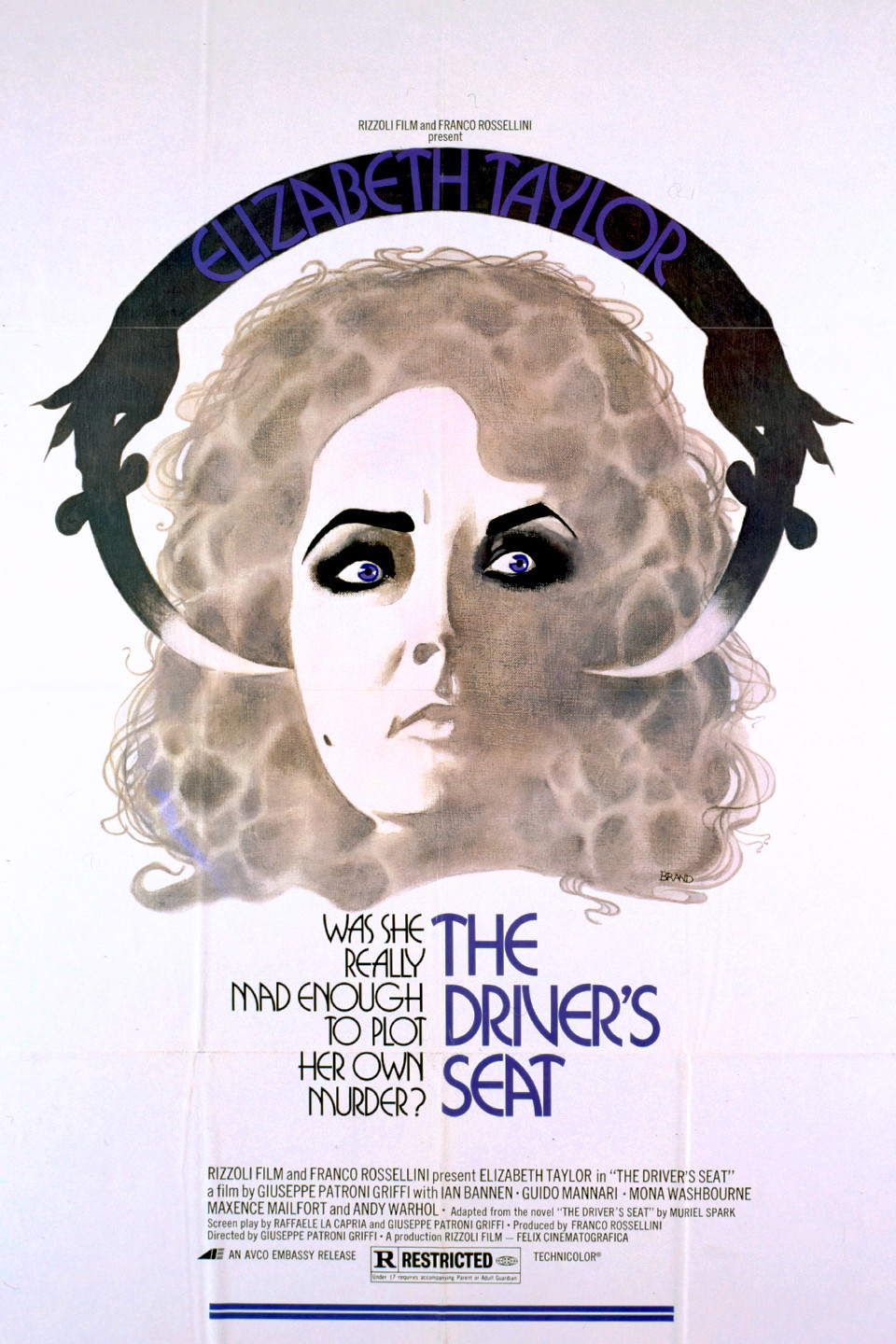
THE DRIVER'S SEAT aka INDENTIKIT (1974)

THE DRIVER'S SEAT aka INDENTIKIT (1974): 
Image result
The late Elizabeth Taylor plays Lise, a woman skittering on the edge of insanity in this elegantly crazy Giuseppe Patroni Griffi thriller. She's actually quite good as a middle aged woman who has gone completely over the deep end and is seeking a violent death as a kind of ultimate erotic fulfillment This is rather like an arty giallo which has numerous references to the urban terror which plagued Italy in the mid 1970s.  And what better place on Earth is there than Rome to escape to.... and die.  But his is not the Rome of LA DOLCE VITA, the city seems to take on the morbid quality of the main character, as if it were responding to her death wish. After all it's metropolis built on centuries of graves.

It has a striking piano score by Franco Mannino, is beautifully shot by Vittorio Storaro (LAST TANGO IN PARIS) and is edited in a compellingly nonlinear fashion by Franco Arcalli (editor of THE CONFORMIST). It took some courage from Elizabeth Taylor to play this role considering the perverse nature of this character and the harrowing final scene. Ted Rusoff dubs the thuggish Roman police investigator trying to untangle the complicated case. Andy Warhol has a minor role as a strange aristocrat, supposedly an English Lord, which probably wasn't too much of a stretch.

This film reminds me somewhat of Jess Franco's NECRONOMICON/SUCCUBUS (1967) and makes an interesting double bill with John Huston's adaptation of REFLECTIONS IN A GOLDEN EYE (1967), in which Taylor played the polar opposite of her character here.

I probably wouldn't have bothered to watch this but my friend Robert Guest insisted that I check it out and I thank him for sending a copy of the old US VHS, which is apparently uncut. Other versions, including the original US release, were trimmed according to the IMDB.  It's very difficult to locate an uncut version of this film in good video quality.

Based on a novel by Muriel Spark, which I haven't read, but there is a distinct feminist undercurrent as it examines the masochism of the main character within a male dominated social-political matrix. 

(C) Robert Monell, 2017

Tuesday, January 03, 2017

LES GLOUTONNES /THE GREEDY/EROTIC EXPLOITS OF MACISTE IN ATLANTIS (1973)

Here's a reprint of my brief review of LES GLOUTONNES, Jess Franco's Z peplum from 1973. Actually this and YUKA, made with same cast, on the same locations, are good, no-budget fun. Originally published by the wonderful Club Des Monstres!

Directed under his French name feather Clifford Brown, this is a fascinating mess due to the fact that Robert de Nesle, or somebody, took a supposedly "serious" movie and made it into a delirous collage of peplum, adventure, comedy, erotic and Fantasy patterns. It's Wal Davis as Maciste vs. Robert Woods as the evil Caronte who attempts to overthrow and kill the Queen of Atlantis, played by Alice Arno. Maciste prevails with the help of "the gobblers" the women of Atlantis. Howard Vernon makes an appearance as Cagliostro (see LA MALDICION DES FRANKENSTEIN), who watches the antics with his horny expectant, played by the puckish Rick Deconninck / Bigitoni. A very interesting, electic score by Robert Viger [?] Is a bonus. There's even a hardcore sex scene thrown in the mix. Mark Forest was supposed to play Maciste, according to Franco. The opening sequence of a misty valley and the first view of the stormy coast of "Atlantis" are outstanding images but unless you are a Franco completist you may hate this film. Franco aussi made YUKA (also 1973 with Davis / Wohlfaart Waldemar and Robert Woods playing the lead in Reviews another erotic "peplum" set in the Middle Ages. Robert MonellFor more reviews:
The greedy aka Maciste and greedy aka Erotic Exploits of Maciste in Atlantide- Jess Franco, 1973, France, 80m
Directed under his French name feather Clifford Brown, this is a fascinating mess due to the fact that Robert de Nesle, or somebody, took a supposedly "serious" movie and made it into a delirous collage of peplum, adventure, comedy, erotic and Fantasy patterns. It's Wal Davis as Maciste vs. Robert Woods as the evil Caronte who attempts to overthrow and kill the Queen of Atlantis, played by Alice Arno. Maciste prevails with the help of "the gobblers" the women of Atlantis. Howard Vernon makes an appearance as Cagliostro (see LA MALDICION DES FRANKENSTEIN), who watches the antics with his horny expectant, played by the puckish Rick Deconninck / Bigitoni. A very interesting, electic score by Robert Viger [?] Is a bonus. There's even a hardcore sex scene thrown in the mix. Mark Forest was supposed to play Maciste, according to Franco. The opening sequence of a misty valley and the first view of the stormy coast of "Atlantis" are outstanding images but unless you are a Franco completist you may hate this film. Franco aussi made YUKA (also 1973 with Davis / Wohlfaart Waldemar and Robert Woods playing the lead in Reviews another erotic "peplum" set in the Middle Ages. Robert Monell

Tuesday, December 27, 2016

BEST FILMS/BLU-RAYS/DVDS of 2016

Symptoms (Blu-ray)
Best of 2016: by Robert Monell

THE NEON DEMON: The high fashion world of Los Angeles is on grotesque display in this glossy art-horror film from Nicolas Winding Refn. It’s a world where vicious competition, soul vampires and casual cannibalism are omnipresent. A visually entrancing satire about a world where appearances are everything. This was the best new film a saw in a theater (nearly empty) in 2016.

SYMPTOMS: The best Blu-ray release of 2106. Jose Ramon Larraz was a Spanish master of light, shadow and madness, all on display in this moody study of a murderess on rampage in rural England. With  brilliant performances by Angela Pleasence and a small but memorable supporting cast. This release finally allowed the world to see this great film in HD, after years of being available only in poor video dupes from battered prints. A stunning experience. From Mondo Macabro.

DR. BUTCHER M.D; BURIAL GROUND: two outrageous  early1980s Italian gorefests featuring endless cannibal/zombie attacks in candy colored HD! Each fully loaded with a titanic cargo of special features: the DR. BUTCHER MD Blu-ray  presents two versions of the film. BURIAL GROUND includes the Italian language track and everything you ever wanted to know about Peter Bark! Both are Highly Recommended.  From Severin Films

COUNT DRACULA’S GREAT LOVE: A Blu-ray – DVD combo from Vinegar Syndrome of Paul Naschy’s Gothic-experimental take on the Dracula legend. A vividly colorful HD remastering, check out Dracula’s crimson lined cape! Special features include the Spanish language track with English subtitles, a commentary track with director Javier Aguirre and Naschy, a fascinating interview with Mirta Miller by Elena of Spanish Fear, and more. A must have.

NIGHT HAS A THOUSAND DESIRES [MIL SEXOS TIENE LA NOCHE]: a welcome Blu-ray release of one of Jess Franco’s most personal and delirious 1980s erotic thrillers, involving mind control, betrayal, seduction and murder. A visual stunner in HD. From Mondo Macabro, your go-to place for quality releases of cult cinema from around the world.

THE FORGOTTEN FILMS OF JESS FRANCO: Dorado Films hits a home run with their first HD release which includes 4k scans from 35m of two rarely seen Jess Franco thrillers, THE SINISTER EYES OF DOCTOR ORLOFF and SILENCE OF THE TOMB (both 1972), both featuring Lina Romay lookalike Montserrat Prous. An interview with star Robert Woods, an informative booklet from Francesco Cesari and Robert Curti are also included among other special features. A recommended collector’s item.

CRIMSON: THE MAN WITH THE SEVERED HEAD: A crazy 1973 crime film featuring Paul Naschy as a robber who gets a brain transplant. The standard and the longer, explicit Euroversions are both included, along with English subtitles and commentary track by Richard Harland Smith.

SEX-MURDER-ART: Fullly loaded multi disc Blu-ray Collector’s Edition, featuring four legendary transgressive epics from the master of body decay, Jorg Buttgereit, NEKROMANTIK, DER TODESKING, NEKROMANTIK 2 and SCHRAMM. There’s not other filmmaker anywhere like Buttgereit, he highlights the grotesque and unspeakable with liberating humor and special insight. Includes CDs of the film’s soundtracks, making of featurettes, a documentary, JB’s short films, a 40 page booklet, commentaries, interviews with the director and collaborators and much more.   New HD, fully uncut & uncensored versions of all four films along with two versions of NEKROMANTIC and director’s introductions to all the films. Cult Epics.

THE KILLING OF AMERICA: Amazing, shocking and brilliant mondo-documentary style survey of decades of all American violence, featuring Lee Harvey Oswald, John Wayne Gacy, Jim Jones and an array of proud-to-be mass murderers. Includes the longer, even more outrageous Japanese versions along with a full metal jacket of extras. From Severin Films.

PRIVATE VICES PUBLIC VIRTUES:  In 1976 legendary Hungarian director Miklos Jancso went to Italy to make this sprawling, surreal account of a bacchanal set in a Central European Kingdom which ended in the shocking death of it’s host, the Prince of the Austro-Hungarian Empire. This high spirited staging of the infamous “Mayerlilng Affair” in the late 19th Century is closer to Fellini than a dry historical text and may be the wildest party ever put on film. With Teresa Ann Savoy. A light blasted, deliciously overripe depiction of decadence and death from a master. The shimmering HD transfer from original elements. The alternate English soundtrack is also available. Another essential delight unearthed and restored by Mondo Macabro.

THE HORRIBLE DR. HITCHCOCK: I’m just happy that what I consider the greatest film from the “Golden Age of Italian horror” finally got a Blu-ray debut this year. It looks better than I’ve ever seen it. This is the shorter US release but it will do until a proper restoration comes along.  Olive Films.

THE HERSCHELL GORDON LEWIS FEAST: The true Godfather of Gore passed away in 2016 but he lives on in this 17 Disc Limited Edition Box set of Arrow Films bursting-at-the-seams box set is a high ticket item  but nevertheless essential for gorehounds, exploitation historians, fans and collectors. It contains 14 of his most iconic films. These are his 100 proof gore classics, BLOOD FEAST THE WIZARD OF GORE, COLOR ME BLOOD RED, THE GRUESOME TWOSOME (a personal favorite), A TASTE OF BLOOD (one of his more Mario Bava-esque productions), THE GORE GORE GIRLS and more. Featurettes, interviews, video essays, audio commentaries and HGL intros are among the too numerous to mention special features. I’ve only gotten through a few of them, the rest will keep you busy for …. A lifetime. 

Sunday, December 18, 2016

FALL OF THE EAGLES (1989): New Review....

Image may contain: 1 person, sitting
LA CHUTE DES AIGLES aka LILLI, UNE CHANSON POUR BERLIN/FALL OF THE EAGLES/UNA CANCION PARA BERLIN (Spanish video title): Working titles: WAR SONG/WAR ZONE
France-Eurocine, Paris

It opens with documentary footage of Adolph Hitler emoting and reviewing marching Nazi troops, but if you are expecting a traditional, action oriented war film you are going to be disappointed by Jess Franco's FALL OF THE EAGLES (1989). You may also be surprised, this a Jess Franco film, after all, that it contains absolutely no erotic scenes, no gore and not a hint of sleaze. It was a set-up for a hack to step in and deliver a typical Eurocine genre film, cheaply and quickly. But Jess Franco delivered something more than that. Despite the inclusion of a generous amount of stock footage from previous Eurocine war films (including EAST OF BERLIN-1978, the closing credits read "Pre-recorded footage by LES [Lesoeur?] Company"*) this maintains a sober focus on a group of Germans who live through, and are profoundly changed by, the tragedy of World War II. 

The scenario, by veteran Eurocine founder Marius Lesoeur, writer-director Georges Freedland and Franco, covers the crucial years of 1939-1945. The main story opens with the birthday party of Lillian Strauss (Alexandra Erlich), the daughter of wealthy banker Walter Strauss (Christopher Lee), who is making a fortune selling war bonds. Lilli is a talented singer and a young woman who also supports Germany's political/military aspirations. Her goal is to sing for wounded Wehrmacht soldiers in hospital. Lilli is in love with Peter Frohlich (Ramon Sheen), a young idealistic musician who does not share her enthusiasm for Hitler's political and military plans. She is pursued by Nazi supporter Peter Froelich (Mark Hamill), who already wears a German uniform. Lilli and Peter also join the Army. Peter is sent to the North African theater, where he becomes cynical and refuses to answer Lilli's letters. He is seriously wounded in battle and hospitalized while Lilli is sent to the Russian front where her train comes under attack. She survives, falls in love with a young Russian folk singer who is killed while trying to sabotage a Nazi meeting place. She makes friends with a secretly gay Nazi officer (Daniel Grimm), who is also killed. Lilli finally reaches the bedside of the mortally injured Peter and agrees to marry him and deliver a last kiss before he dies before her eyes. Finally reunited with first love Karl,  But her downward spiral is completed when he is shot down by American forces as they try to escape the carnage. Hitler is dead and Germany is defeated. The last scene takes place in a crowded pub as Lilli now sings tawdry songs for the Allied victors as her now destitute father, ruined by the economic collapse of Nazi Germany, looks on disapprovingly. 

There's a lot of plot here, most of it telegraphing the theme of the futility of war in the fashion of high melodrama. Given that the war scenes occur via either stock footage, reported by radio broadcasts or are talked about after the fact, it is left up to the actors to engage interest. With the exception of an pathetically unprepared Ramon Sheen, they do a pretty credible job, especially the aging but still towering Christopher Lee as the slowly deflating banker and Alexandra Erlich who performs her musical numbers and love scenes with equal verve. Her cabaret scenes are accompanied by frequent Franco composer Daniel J. White, who plays piano in front of a Nazi flag toward the beginning and in front of a large American flag in the final scene. The dialogue, adapted by Franco and veteran Eurocine scribe Georges Freedland, is sincere in a 1980s television miniseries mode, "People hate us, They should realize it's for their own good. We're bringing them a new order for a better world." The final shot of Lilli's emotionally ravaged, hardened, coarsened face telegraphs the theme more effectively. 

There are little "Jess Franco" touches throughout, such as the elegant music box topped with waltzing ballerinas which is used as a transitional device and the "last kiss" between Erlich and Hamill. The most interesting character, the gay Nazi officer, delivers a line which is pure Jess Franco, "Nobody respects a nice guy," before expiring. This does not look or play like any other Jess Franco film, it's played straight and serious from beginning to end. It probably won't please fans looking for scenes of the director's trademark "horror y sexo" nor will it satisfy war movie enthusiasts. But given the material and conditions it's obviously that Franco took it seriously and did the best job he could. It's not as unwatchable as most Eurocine World War II exploitation (HELLTRAIN, ELSA FRAULEIN DEVIL SS), has a number of effective dramatic scenes and delivers its admittedly unoriginal message that "No one wins wars, everyone loses" in a fairly resonant manner. The use of music, a wedding march played like a dirge by a Nazi, the war songs given a sexy twirl by Lilli and some familiar Daniel J. White cues are sometimes the only indicator that this is a Jess Franco film. Also, the inclusion of "good Nazis" in the sweeping scenario may cause some to feel this is a morally ambiguous, agathokakological war film. 

The end scroll includes a lyrics credit for "Clif Brown" and the final Ultra Stereo mix by Eric Lardy (who would co-produce Franco's next project, LA PUNTA DE LAS VIBORAS/DOWNTOWN HEAT--1990) has stability and resonance in the English language version screened for this review, which thankfully includes the real voices of Christopher Lee and the other actors, recorded in what appears to have been in direct sound. Other versions are reportedly more problematic. Franco had considerable difficulty with the system during post-production, prompting him to walk away, severing his longtime ties with Eurocine.  For comparison sake, a viewing or reviewing of Rainer Werner Fassbinder's LILI MARLEEN (1981) or Bob Fosse's CABARET (1972) is recommended. 

Thanks to Nzoog.

*There also appears to be some additional footage from Patrice Rhomm's 1977 ELSA FRAULIEN SS and Alain Payet's TRAIN SPECIAL POUR SS here and there.  Footage from Alfredo Rizzo's Spaghetti War epic I GIARDINI DEL DIAVOLO (1971) was also acquired and is extensively used, as it was in Franco's previous Eurocine Nazi-related co-production LA TUMBA DE LOS MUERTOS VIVIENTE/OASIS OF THE ZOMBIES (1981), and as in that project the grading, formatting and style of that Italian war movie obviously clashes with the Franco shot footage. This Italian produced footage was also used in RETURN OF THE BLOODSUCKING NAZI ZOMBIES, a 2103 horror-war web series by Mathis Vogel and Robert Monell, available on Blu-ray and DVD from Spain's CAMEO MEDIA S.L., as a supplemental feature to Jess Franco's last completed film, AL PEREIRA VS. THE ALLIGATOR LADIES (2012).

(C) Robert Monell, 2013

Saturday, December 03, 2016


ANTICIPATION (1967)

Sometime in the near future a military uniformed astronaut, from Earth or another galaxy depending on which dubbed version viewed, lands at Orly International Airport, checks in and is guided to a room in the adjacent hotel. As he proceeds to relax a porter ushers in an "official" prostitute (Marilu Tolo), who goes about her job in a robotic fashion, causing her to be rejected by our spaceman protagonist. He then orders "Miss Conversion" (Anna Karina), making her final appearance of many in a Godard film, who chats him up until they share a rather chaste kiss, after which she looks into the camera and smiles. FIN....

This delightful, visually entrancing 19 minute sketch, was released as part of a rather clunky omnibus French-Italian produced omnibus film (there were a lot of those in the 1960s coming out of Italy and France) titled THE WORLD'S OLDEST PROFESSION for the US market. I happened on it during a drive-in visit sometime in 1968. I think it was co-featured with Terence Young's Europsy, THE DIRTY GAME, which at least gave us a certain synchronicity of titles. THE DIRTY GAME was a downbeat compilation of spy stories. THE WORLD'S OLDEST PROFESSION was an obnoxiously upbeat series of French Ooo La La shorts trying to wring low humor out of the depressing progression of prostitution through the ages. Each story was helmed by a different "name" director and featured a different international female star, from Jeanne Moreau in Philippe De Broca's Mademoiselle Mimi to Raquel Welch in THE GAY 90s.  Most of the stories were painfully witless and overdone to the max. The film was a boxoffice and critical disaster, 

ANTICIPATION is the one highpoint in this ill advised Eurotrash enterprise, and I enjoyed my introduction to Godard back then and made a mental note to watch out for his future films. Of course by then he had already directed such high profile features as BREATHLESS (1960), which made stars of Jean Seberg and Jean-Paul Belmondo while introducing an alternate way of making free form, low budget films with portable equipment in the streets rather than traditional studio shot megaproductions. Even more radical experiments followed. Several of his best films (VIVRE SA VIE, CONTEMPT), in fact, had already focused on the topic of prostitution and its sociological fallout in the modern world. ANTICIPATION works as an addendum to Godard's 1965 Neo-Noir ALPHAVILLE, which presented Paris as a futuristic nightmare of existential darkness, controlled by a supercomputer and populated by criminals, secret agents and prostitutes. Anna Karina also starred in that classic along with Eddie Constantine as secret agent Lemmy Caution. That film was shot in high contrast black and white, turning Paris into visual abstraction. The world of ANTICIPATION is a different kind. Godard scans the cubist structures of the runway, reception area and hotel with even more abstract set-ups, but this time using gold, blue and red monochrome filters which create a completely artificial environment. At times the look anticipates George Lucas' visionary THX-1138 (1971). 

The outfits worn by the prostitutes are equally stylized, Ms. Physical wears a collar which seems like a futurist sculpture and has to be undone with a sizable wrench. Karina wears a broad, floor length late 19th Century gown, which looks like a leftover from GONE WITH THE WIND. Godard packs a lot of visual/audio commentary (the dialogue is very mechanical and often interrupted by a musical mix of electronica/classical.
There are no performances per se. This future world doesn't allow for dramatic/sentimental displays. 

ANTICIPATION is best viewed as a standalone, away from the awful remainder of THE WORLD'S OLDEST PROFESSION. 

(C) Robert Monell, 2016

Saturday, October 01, 2016

Monday, September 26, 2016

Tentazione 1988 Trine Michelsen


Olinka in a Sergio Bergonzelli film

Herschell Gordon Lewis (1929-2016)


A Taste Of Blood VHS - Something Weird Video Herschell Gordon Lewis Horror:
Image result for Herschell gordon Lewis images
    Above: Frequent Herschell Gordon Lewis collaborator/actor, Bill Kerwin


"Have you ever had the fine luxury of observing the spectacle of human butchery in person?!" Montag the Magnificent [Ray Sager] in Herschell Gordon's Lewis' gore masterpiece, THE WIZARD OF GORE. A triumph of plastic aesthetics and balsa wood environments leading to Zen enlightenment on the nature of reality, consciousness, genre and cinema. The CITIZEN KANE of no budget gore. I love the shouted, totally non-realistic dialogue and delirious "magic" presentations. It still resonates as true Psychotronic cinema. The Wizard's shows are played with a delicious deadpan delivery which makes them all the more entertaining and unsettling. The blood spattered aesthetics are never convincing to the eye but they achieve the same kind of delayed horror depicted in this vaudeville of blood. The pleasures of watching and the disgusting nature of what is presented are contrasted in stark relief. You never really know where this film is going and that's part of the fun.

I immediately thought of this film today upon hearing of the passing of Herschell Gordon Lewis. It speaks to the mainstream 1960s naivete of an audience in search of the denied pleasures of the unconscious mind. The pleasure of the botched magic trick. The pleasure of someone else getting skewered by a mad barker of mutilation who gets away with it because somewhere deep down we want him to.

A Grindhouse auteur with no excuses, HGL was a kind of anti Orson Welles, enamored of the kind of magic which a drive-in admission could buy. I still remember the lurid newspaper ads for BLOOD FEAST in local newspapers. Of course I was too young to go, but they fired up my bloodthirsty 10 year old imagination. It should be remembered that he made some some highly entertaining and occasionally artful films (A TASTE OF BLOOD).

Lewis started out as a mainstream businessman in direct marketing and copy-writing. His early softcore features (LIVING VENUS) were made with legendary producer David Friedman. BLOOD FEAST and 2000 MANIACS burst the dam with torrents of crimson and detailed gore scenes featuring all matter of mutilations, usually visited upon attractive females by psychotic men. The huge success of these films allowed him to continue in a career of mind-boggling schlock cinema. My own personal favorites include THE GRUESOME TWOSOME, a mid 1960s tale of a demented mother-son relationship which culminates in madness and murder as a stuffed cat watches, and SOMETHING WEIRD, a startlingly original psycho-psychic-witchcraft thriller delightfully satirizing small town police incompetence, high level governmental cover-ups and the buried tensions between the sexes of that era.

While highbrow critics complained of amateurish acting and sometimes poor cinematography in his films he nevertheless packed his features with the non-stop violent/sexual action his audiences demanded while undermining them with sharp commentary on 1960s gender inequality (SUBURBAN ROULETTE), lingering resentments in the Deep South about the outcome of the US Civil war (2000 MANIACS) and those closed worlds of highbrow art critics vs. lowbrow artisans (COLOR ME BLOOD RED). His films delivered.

He was always self deprecating about his work, especially on his DVD commentaries with producer Friedman. One of my favorite of his stories is about the "actor" who played a police detective in BLOOD FEAST who wrote his lines on the inside of his palm for quick consultation during shooting. But among the amateur cast were pros like Bill Kerwin who solidly anchored such films as BLOOD FEAST and A TASTE OF BLOOD.

Some of his films included color gel lighting, Dutch camera angles and other effects which stood out in the low-budget-quickie aesthetic. He regularly included much dark humor in his crimson colored world, casting comedian Henny Youngman as a crude strip-club boss amidst the outrageous gore antics of THE GORE-GORE GIRLS. Lewis would return to marketing, writing some books on the subject and teaching college level literature classes after THE GORE-GORE GIRLS but would return to horror years later with a remake of BLOOD FEAST and on the fan circuit.

Some of his most iconic titles have appeared on Blu-ray, such as Something Weird Video's release of THE BLOOD TRILOGY in HD. The upcoming release of a massive 17 Disc Limited Collector's Edition Box set, The Herschell Gordon Lewis Feast, featuring key titles, fully loaded with commentaries, galleries and special features, seems destined to be a definitive collector's item.

Herschell Gordon Lewis was in the right place at the right historical moment, long before such "names" as Sam Peckinpah, John Waters, Lucio Fulci, et.al. got to where he started out in 1963. At least he opened doors that had previously been slammed shut by decades of Hollywood production codes, local censors, media outlets, mainstream critics and strict studio guidelines. He was an original and we won't see his likes again anytime soon.

(C) Robert Monell, 2016